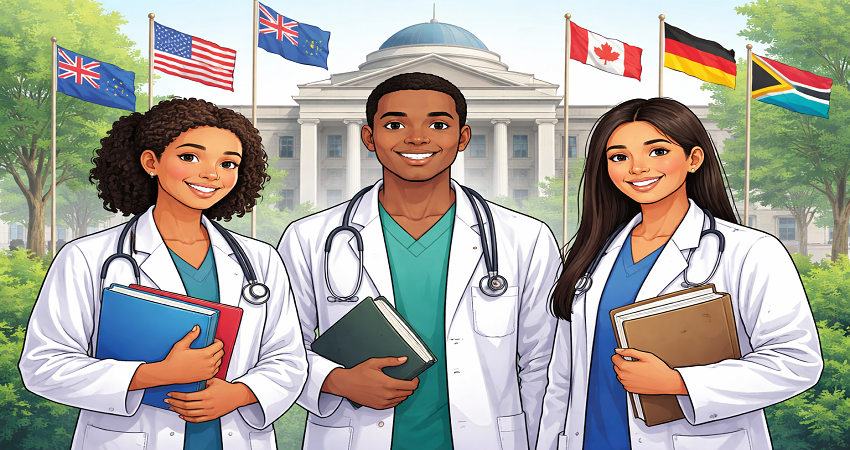
Choosing the right medical school is one of the most important decisions for any aspiring doctor. For South African students, studying medicine abroad has become an increasingly attractive option due to limited local seats, global exposure, and access to advanced healthcare systems.
However, selecting the best international medical school requires careful consideration of factors like accreditation, tuition costs, language of instruction, and career opportunities.
Studying medicine overseas not only provides world-class education but also opens doors to global career pathways. From Europe to Asia and North America, many universities offer high-quality medical programs specifically suitable for international students, including those from South Africa.
In this article, we will explore the top 10 best medical schools abroad that South African students can consider, along with key details to help make an informed decision.
Why South African Students Choose Medical Schools Abroad?
Many South African students opt to study medicine abroad due to intense competition for limited seats in local universities. Additionally, international medical schools often offer diverse clinical exposure, modern facilities, and globally recognized degrees.
Studying abroad also allows students to experience different healthcare systems, cultures, and medical practices, which can enhance their overall professional development.
Factors to Consider Before Choosing a Medical School Abroad
Before applying, students should evaluate several factors such as accreditation, recognition by South African medical councils, language of instruction, tuition fees, living costs, and internship opportunities.
It is also important to check whether the degree allows graduates to practice in South Africa or other countries after completing licensing requirements.
1. Harvard Medical School (USA)
Harvard Medical School is widely regarded as one of the best medical schools in the world. It offers cutting-edge research opportunities, top-tier faculty, and access to world-renowned hospitals. Although admission is highly competitive, South African students with strong academic records and extracurricular achievements can apply. The institution emphasizes innovation and leadership in healthcare.
2. University of Oxford Medical School (UK)
The University of Oxford offers a prestigious medical program known for its academic excellence and research-based learning approach. South African students benefit from its globally recognized degree and structured clinical training. The UK system also makes it relatively easier for international graduates to integrate into global healthcare systems.
3. University of Melbourne Medical School (Australia)
The University of Melbourne is one of the top choices for international students due to its high-quality education and multicultural environment. The Doctor of Medicine (MD) program is designed to provide both theoretical knowledge and practical clinical skills. Australia’s healthcare system also offers excellent exposure for medical students.
4. University of Toronto Faculty of Medicine (Canada)
The University of Toronto is known for its strong focus on research and innovation in medicine. South African students can benefit from its advanced curriculum and partnerships with leading hospitals. Canada is also known for its safe environment and high standard of living, making it an attractive destination.
5. Karolinska Institute (Sweden)
Karolinska Institute is globally recognized for its contribution to medical research and is responsible for awarding the Nobel Prize in Physiology or Medicine. The institution offers high-quality education with a strong emphasis on research. Many programs are available in English, making it accessible for international students.
6. University of Cape Town – International Collaboration Programs
While based in South Africa, the University of Cape Town has partnerships with international institutions that allow students to gain global exposure. These collaborative programs enable students to study part of their course abroad, combining local knowledge with international experience.
7. University of Edinburgh Medical School (UK)
The University of Edinburgh offers a well-structured medical program with a strong emphasis on clinical practice and patient care. It has a long-standing reputation for excellence and provides opportunities for international students to gain hands-on experience in diverse medical settings.
8. National University of Singapore (NUS) Yong Loo Lin School of Medicine
NUS is one of Asia’s top medical schools, offering modern facilities and a globally recognized curriculum. The institution focuses on innovation, research, and practical training. Singapore’s advanced healthcare system provides excellent learning opportunities for medical students.
9. University of Heidelberg Medical Faculty (Germany)
The University of Heidelberg is one of Europe’s oldest and most respected universities. It offers affordable education compared to many Western countries, with some programs available in English. The institution is known for its strong research output and clinical training.
10. University of Auckland Faculty of Medical and Health Sciences (New Zealand)
The University of Auckland provides a comprehensive medical program with a focus on community health and patient-centered care. New Zealand’s healthcare system offers practical exposure and a supportive learning environment for international students.
Cost of Studying Medicine Abroad
The cost of studying medicine abroad varies depending on the country and institution. Tuition fees can range from moderate in countries like Germany to very high in the United States. In addition to tuition, students must consider accommodation, living expenses, travel, and insurance. Scholarships and financial aid options are available in many universities and should be explored.
Admission Requirements for South African Students
Most international medical schools require strong academic performance in subjects like Biology, Chemistry, and Physics. Standardized tests such as the MCAT or UCAT may also be required depending on the country. Additionally, proof of English proficiency through exams like IELTS or TOEFL is often mandatory.
Career Opportunities After Studying Abroad
Graduating from a reputable international medical school can open doors to global career opportunities. However, students must ensure their degree is recognized by relevant medical boards in South Africa if they plan to return. Licensing exams and internships may be required to practice in different countries.
Challenges of Studying Medicine Abroad
While studying abroad offers many benefits, it also comes with challenges such as cultural differences, homesickness, financial pressure, and adapting to new education systems. Proper planning and support can help students overcome these challenges effectively.
FAQs About Best Medical Schools For South African Students Abroad
1. Can South African students study medicine abroad easily?
Yes, South African students can study medicine abroad, but the process requires careful planning. Students must meet academic requirements, pass entrance exams if needed, and ensure they have sufficient financial resources. Proper research into universities and visa requirements is also essential.
2. Which country is best for studying medicine abroad?
The best country depends on individual preferences such as budget, language, and career goals. Popular choices include the USA, UK, Australia, Canada, and Germany due to their high-quality education and global recognition.
3. Is a foreign medical degree valid in South Africa?
Yes, but only if the degree is recognized by the Health Professions Council of South Africa (HPCSA). Graduates may need to pass licensing exams or complete additional training before practicing locally.
4. What is the cost of studying medicine abroad?
Costs vary widely depending on the country and university. Tuition fees can range from affordable in some European countries to very expensive in the USA or UK. Living expenses should also be considered.
5. Are scholarships available for South African students?
Yes, many universities and organizations offer scholarships and financial aid for international students. These can significantly reduce the financial burden of studying abroad.
6. Do I need to take an entrance exam?
Many medical schools require entrance exams such as the MCAT, UCAT, or BMAT. The requirement depends on the country and institution you are applying to.
7. Is English proficiency mandatory?
Yes, most universities require proof of English proficiency through tests like IELTS or TOEFL, especially if English is not your first language.
8. How long does it take to complete a medical degree abroad?
The duration typically ranges from 5 to 7 years, depending on the country and program structure. Some countries also require additional internship or residency training.
9. Can I work while studying medicine abroad?
In many countries, international students are allowed to work part-time. However, medical programs are demanding, so balancing work and study can be challenging.
10. What are the benefits of studying medicine abroad?
Studying abroad provides global exposure, access to advanced medical facilities, and better career opportunities. It also helps students develop independence and cross-cultural communication skills.
Conclusion
Studying medicine abroad offers South African students a valuable opportunity to receive world-class education and gain international experience.
By carefully selecting the right university and understanding the requirements, students can build a successful medical career. Proper planning, research, and determination are key to making the most of this life-changing journey.